
The Solitary Witch: Walking Your Own Path
Choosing to walk the path of a solitary witch means embracing a practice that is entirely your own. You’re not bound by group rules, rituals, or traditions—unless you choose to be. This approach suits witches who are independent by nature, prefer quiet reflection, or live in places where access to a coven just isn’t realistic.
Solitary witchcraft is just as valid and powerful as coven-based practice. Some people simply feel more connected when their Craft is private, personal, and adaptable to their needs.
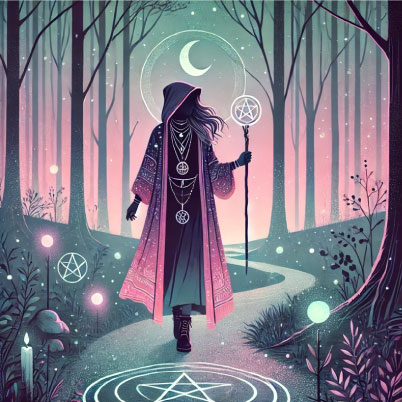
What Does It Mean to Be a Solitary Witch?
A solitary witch practises without a group or coven. You design and direct your own rituals, seasonal celebrations, spellwork, and spiritual development. Some solitary witches follow a specific tradition like Wicca or Druidry. Other solo witches create a path that’s a mix of influences (eclectic)—or something completely unique.
You’re not accountable to anyone but yourself. That means your practice can evolve freely. No need to wait for others, ask for permission, or explain your beliefs. It’s just you and your Craft.
Being solitary doesn’t mean you’re cut off from others. Plenty of witches connect with like-minded people online or go to the odd public ritual. But the core of your practice is yours alone.
Starting Out as a Solitary Witch
1. Know Your Why
Take a moment to think about what’s drawing you to witchcraft. Is it a spiritual connection to nature? A desire to heal? An interest in divination or energy work? All of the above? Whatever it is, knowing your reason gives your path direction.
2. Study at Your Own Pace
Read, watch, listen, learn. Whether it’s witchy books, podcasts, or your own intuitive nudges, there’s no shortage of resources. You don’t need to rush. Witchcraft is a lifelong practice.
Don’t feel you have to learn everything at once. Focus on what interests you most right now. That could be moon magic, herbalism, tarot, candle spells—whatever pulls you in. Follow your curiosity.
3. Set Up a Sacred Space
Your sacred space can be as simple as a shelf or corner with a candle, a few stones, or personal items. It’s somewhere you can meditate, journal, cast spells, or just connect with your spiritual self.
The point is to create a space that feels safe and focused. It doesn’t need to look like it came off Pinterest and you don’t need to spend a fortune either. It just needs to feel like you.
4. Start Practising
Don’t wait until you feel like you know everything—start small. Magick is a practice. Light a candle with intention. Charge a cup of tea with energy. Sit in silence and ground yourself. Try a simple spell. Keep notes.
Your practice will grow naturally the more you engage with it. Keep it regular, even if it’s just a few minutes a day. Consistency builds power.
Tools of the Solitary Witch
You don’t need fancy gear, but some solitaire witches like to use tools to help focus energy. Common ones include:
- Wand – to channel energy
- Athame – a ritual blade (symbolic, not for cutting)
- Chalice – often used to represent water
- Pentacle – a symbol of earth and protection
- Candles – for fire, intention, or specific spells
- Crystals, herbs, incense, essential oils – depending on your practice
- Book of Shadows – explained separately below
- Cauldron – even a mini iron cauldron can be really handy
Use what feels right to you. Everyday items can work just fine—what matters most is the intention you bring.
Your Book of Shadows
This is your witchy journal. It can include:
- Spells you’ve tried (and how they turned out)
- Rituals you’ve created
- Notes from meditations
- Tarot spreads
- Symbol meanings
- Moon cycles
- Anything else you want to track
You can use a regular journal or something more fancy. It doesn’t have to be pretty or organised (unless that’s your thing) but it should be kept private and secure and it shouldn’t be used for anything else. Think of it as your personal guidebook. A way to see how far you’ve come (and an possible heirloom for future witchy generations, if you choose to pass it on!).
You can learn more about the book of shadows, grimoires, and the most common witchy tools, what they are, how to use them, including budget and luxury options, here:
Celebrating the Seasons Alone
Many solitary witches follow the Wheel of the Year, a calendar of eight seasonal festivals:
- Samhain (Oct 31)
- Yule (Winter Solstice)
- Imbolc (Feb 1)
- Ostara (Spring Equinox)
- Beltane (May 1)
- Litha (Summer Solstice)
- Lughnasadh or Lammas (Aug 1)
- Mabon (Autumn Equinox)
As a solo witch, you can celebrate these festivals however you like. Maybe you light a candle, make a seasonal meal, or do a bit of journaling. Keep it simple or go all out—it’s up to you.
You can learn all about the Wheel of the Year Festivals and their meanings here:
As a solitary witch you may also choose to celebrate the esbats, which are rituals that honour the phases of the moon. You can learn more about the esbats here:
Challenges of Going Solo
Being a solitary witch comes with total freedom—but also full responsibility. You have to motivate yourself, do your own research, and reflect on your own experiences.
Here are a few common struggles:
- Feeling isolated: Especially if no one around you shares your beliefs
- Doubting your practice: Without feedback, it’s easy to wonder if you’re “doing it right”
- Lack of structure: Too much freedom can be overwhelming sometimes
The good news? These challenges can be managed. Join online groups, take classes, or talk to other practitioners if you need a boost. You’re not as alone as you might think.
The Power of the Solitary Path
This path is all about self-trust. You learn by doing. You build your own rituals, honour what matters to you, and grow from your own experiences.
Being solitary doesn’t mean you’re less skilled or serious. In fact, it often leads to a strong sense of personal power and connection. You’re not relying on anyone else’s energy—just your own. You set your boundaries and follow your rhythms. You call the shots.
Final Thoughts
There’s no “right” way to be a witch, solitary or otherwise. If this path feels like home to you, trust that instinct. Build a practice that reflects who you are and what you believe. Let it change with you.
Whether you’re a baby witch just starting out, or have been practising for years, the solitary path can be incredibly rewarding. Quiet, empowering and deeply personal. So light that candle. Cast that spell. Listen to your gut. And walk your path—your way!