Exploring the Greek Pantheon
Welcome to our exploration of the Greek Pantheon, a significant and influential component of ancient Western spirituality. As we venture into this subject, it’s important to understand how the Greeks organised their gods and what this means for us as modern practitioners. This section will guide you through the hierarchy, mythology, and general structure of the Greek Pantheon, setting the stage for a deeper look at the prominent deities in their respective profiles.
The Hierarchy of the Greek Pantheon
The Greek gods are typically categorised into several tiers of divinity, each reflecting their importance and realms of influence.
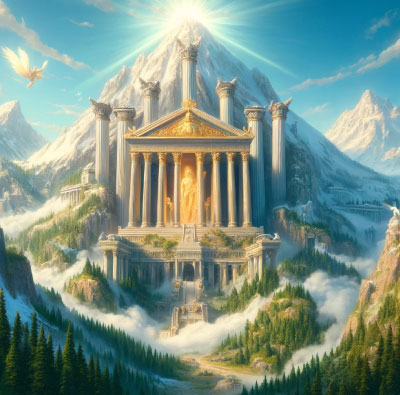
- The Olympians: At the top of the hierarchy are the Olympians, twelve gods and goddesses who reside on Mount Olympus under the leadership of Zeus, the god of the sky and thunder. This group includes Hera, Poseidon, Demeter, Athena, Apollo, Artemis, Ares, Aphrodite, Hephaestus, Hermes, Hestia, and either Dionysus or Hades, depending on the source.
- Titans: The generation before the Olympians, the Titans, are often depicted as the personifications of elemental forces and primal concepts. They were overthrown by the Olympians in a series of battles known as the Titanomachy.
- Primordial Deities: Before the Titans, there were the Primordials, deities like Chaos, Gaia, Tartarus, and Eros, who emerged at the creation of the universe. They represent the basic components of the world and the universe.
- Chthonic Deities: These gods and goddesses are associated with the underworld and the earth and include Hecate, Hades and Persephone.
- Lesser Divinities: This group includes nymphs, satyrs, and other minor deities who usually have specific local significance or embody natural phenomena.
Understanding Greek Mythology
Greek mythology is vast and complex, encompassing a wide range of tales that explain the natural world, human behaviour, and philosophical questions about justice, love, and power. These stories serve as more than just entertainment; they offer insights into how the ancient Greeks understood the world around them.
For us in the Wiccan community, these myths can be particularly insightful. They provide rich examples of how divine energies can influence events and reflect human nature. Understanding these stories and the qualities and traits of the Gods involved gives us a framework for working with them.
Why It Matters
For Wiccans, engaging with different pantheons can be a rewarding part of our spiritual practice, offering diverse perspectives and energies to work with. The Greek Pantheon, with its well-documented myths and structured hierarchy, presents a unique opportunity to learn from a well-established system of divine interaction. As you learn about these deities and their stories, consider how their attributes and tales resonate with your personal practice and the broader Wiccan principles of reverence for nature, the divine, and the interconnectedness of all things.
As we move forward, the prominent deities will be discussed in detail in separate profiles. This approach will help you connect with and understand the specific energies and lessons each god or goddess embodies, enhancing both your knowledge and spiritual practice. I have included profiles of prominent Titans, Chtonics and Olympians. However, not all the Greek Gods and Goddesses will be covered here. Information about the gods is widely available so be sure to research any particular deity you feel called to work with yourself.