
Tools of the Craft: Your Guide to Essential Witchcraft Tools
Starting With the Basics: What Are Tools of Witchcraft?
The tools of the witchcraft are physical objects witches use in rituals, spellwork, and day-to-day spiritual practice. They help focus intention, represent the elements, honour deities, and channel energy. Some witches use all tools of The Craft, some use a few, and some use none at all. There are no hard rules here, only what works best for you.
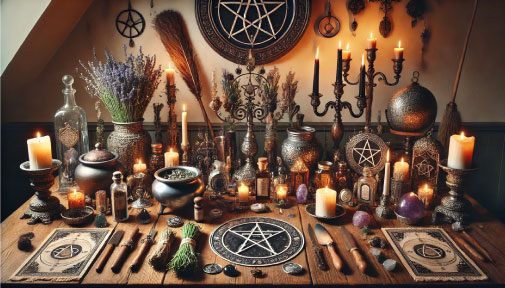
These tools of witchcraft aren’t just props. They’re extensions of your will. Once you’ve used a tool a few times with clear intention, it starts to hold energy. That’s why many witches cleanse and consecrate tools before use. But don’t worry—we’ll talk about that too.
If you’re looking for info about a particular tool, skip to our master list of witchy tools
Setting Up Your Altar: Your Spiritual Workbench
Your altar is your sacred space. Think of it as your spiritual workbench where you cast your circle, work your spells, honour the divine, meditate, or just ground yourself. This space can be permanent or temporary. It can live on a fancy antique table or a windowsill.
What You Might Include:
- Altar cloth – optional but nice for defining the space. A scarf or tea towel does the job too.
- Altar Candles – represent fire and light. Go for colours that match your intent.
- Representation of the Goddess and God – statues, stones, shells, or even photos can work.
- Incense or a feather – represents the element of Air, should be placed at the eastern part of your altar/circle
- Candle – represents the element of Fire, should be placed at the southern part of your altar/circle
- Bowl of water – represents the element of water, should be placed at the western part of your altar/circle
- Bowl of soil or a stone – represents the element of earth, should be placed at the northern part of your altar/circle
- Crystals, herbs, or offerings – for whatever you’re working on.
- Altar plate – a central plate or small board to place offerings, candles, or symbols.
Budget tip: Dollar stores, charity shops, and your own kitchen cupboards are treasure troves. Don’t let aesthetics stop you.
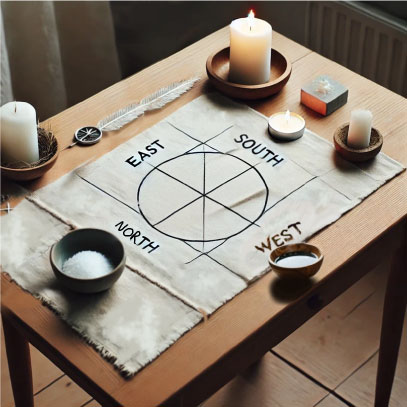
A Basic Altar Setup for Beginners
If you’re just starting out, you don’t need a full altar packed with tools of witchcraft. A simple setup can be just as powerful.
Here’s one way to begin:
- Define your space: Place a cloth on a small table, shelf, or even a tray to define the space.
- Get your bearings: Use a compass or maps feature on your phone to figure out where North, South, East and West are (if you don’t already know).
- Represent the elements: Place a feather in the East, a tealight candle in the South, a little dish of water in the West, a little dish of soil in the North to represent the elementals.
- Represent the deities: If you like, add something that represents the God and Goddess to you—this could be a picture, flower or simple symbols.
- A wand or athame for casting your circle would be helpful too but you can cast with your index finger if you don’t have them yet.
And that’s it. This setup is enough to start most spellwork or rituals. You may need ingredients for particular spells but you can start small and build on it over time.
Budget tip: Again, discount stores, charity shops, supermarket aisles and your own kitchen cupboards are great places to start. Don’t let aesthetics stop you and don’t feel bad if you can’t afford fancy items. Remember, historically speaking, witches have always used whatever was readily available to them. You are more in tune with the witches that have gone before you when you are using the herbs from your own garden or kitchen cupboard.
Frequently Asked Questions: Witchcraft Tools and Practice
What do the different witchcraft tools mean?
Each tool in witchcraft has a symbolic function. For example, the athame channels energy and represents willpower; the chalice symbolizes water and the divine feminine; the pentacle grounds and protects. Tools help you connect with the elements and your intentions more deeply. Keep reading for our full guide on witchy tools.
Do I need expensive tools for witchcraft?
Not at all. Your energy and intent are the real power sources. A wooden spoon can be a wand, a kitchen knife can be a boline, and a jam jar can become a spell jar. In fact, utilising budget-savvy, recycled or easily available items as witchcraft tools is often preferred as the more environmentally friendly option. Use what you have and upgrade if or when you feel the need.
How do I consecrate my magickal tools?
Consecration is process that transforms your tools, whether high-end or budget friendly, from mundane objects to sacred instruments. It requires a simple ritual to cleanse them and imbue them with specific energy to make them more effective.
What crystals should I start with?
Start simple. Clear quartz (amplifies energy), amethyst (spiritual insight), rose quartz (love), black tourmaline (protection), and citrine (confidence and success) are great all-rounders. Choose based on what you’re working on.
What’s the difference between incense and resins in rituals?
Incense sticks and cones are easier to use and come in many scents. Resins (like frankincense or myrrh) are more traditional and are burned on charcoal discs. Resins tend to have a stronger, more focused energy and are great for deeper ritual work.
Can I use everyday items as tools for spell work?
Absolutely. Everyday objects carry energy too. A necklace can become a charm, a jar from your kitchen can hold a spell, and a coin can be enchanted for luck. What matters is your intent and how you charge the item. Once an object is used for magickal purposes, it shouldn’t be put back into regular use. For example, if you do an egg cleanse using a regular glass from your kitchen, don’t then drink out of that glass!
How do I store and care for magickal herbs and tools?
Keep herbs in labelled jars or bags in a cool, dry place away from sunlight. Cleanse tools regularly—especially after big rituals—using smoke, moonlight, or salt. Store your tools respectfully, either on your altar, in a box, or wrapped in cloth when not in use.
Witchcraft Tools
To help you get organised, here’s a master list of more than 40 common witchcraft tools—including ritual & energy work, spellwork, divination and altar tools! You don’t need all of them—just what suits your practice. This is by no means an exhaustive list. We witches tend to use whatever is available to us, so the tools of witchcraft used can vary wildly between practitioners—not to mention across the different traditions and cultures.
You can use this list as a reference when building your witchy toolkit. Keep it flexible—your practice will evolve, and so will your tools.
Master List:
The Tools of Witchcraft and How to Use Them
Altar Tools
Let’s explore the most common tools of witchcraft for your altar.
Altar Cloth
An altar cloth helps create a clear, designated space for spiritual work. It can reflect seasonal colours, moon phases, or your personal aesthetic.
Used For:
- Defining your ritual space
- Protecting your altar surface
- Marking intentions or themes
High-end option: Embroidered or custom-designed altar cloths in natural fibres.
Budget-friendly option: A scarf, tea towel, or piece of fabric that feels meaningful to you.
Symbols of the Goddess and God
Symbols of deities bring divine presence into your practice. These can be anything that helps you connect with the energies of the divine feminine and masculine, or the specific gods and goddesses you work with.
Used For:
- Honouring the divine on your altar
- Focusing energy during ritual
- Inviting deity presence in spellwork
High-end option: Hand-sculpted statues, artisan carvings, or deity-specific art.
Budget-friendly option: Shells, stones, candles, drawings, or photos that represent the divine to you.
Symbols of the Elementals
Representing Earth, Air, Fire, and Water. Elemental tools are used to call in and balance the four classical elements in ritual and spellwork.
Used For:
- Creating balance on your altar
- Casting a circle
- Honouring the directions
High-end option: Custom items like sculpted elemental statues or engraved bowls.
Budget-friendly option: Use a rock (earth), feather (air), candle (fire), and bowl of water.
Altar Plate
An altar plate is a surface to place candles, offerings, or symbolic objects. It anchors your intention and creates a focal point.
Used For:
- Holding spell ingredients
- Displaying offerings
- Representing the element of earth or spirit
High-end option: Engraved wooden or ceramic plate with symbols.
Budget-friendly option: A small dinner plate, cutting board, or coaster.
Pentacle
The pentacle is usually a flat disc with a five-pointed star (pentagram) inside a circle. It represents earth, grounding, and protection.
Used For:
- Placing spell ingredients on
- Charging items
- Representing earth on your altar
High-end option: A brass, silver, crystal, or wooden disc with detailed carving is a glam option.
Budget-friendly option: Draw one on cardboard, clay, or even use a printed image laminated with tape is a more affordable version.
Offering Bowl
A bowl used to hold offerings for deities, spirits, or ancestors. A way of giving back in ritual, giving thanks and exchanging energy.
Used For:
- Holding food, herbs, or drink
- Ancestral offerings
- Sabbat celebrations
High-end option: Use a hand-carved or metal bowl for a fancy version.
Budget-friendly option: Any small bowl that feels special.
Compass
Some witches use a compass to align rituals with cardinal directions or elemental associations.
Used For:
- Elemental direction work
- Casting circles with intention
- Sabbat alignments
High-end option: Antique or crafted compass is top-tier.
Budget-friendly option: Basic hiking compass or compass app.
Candle Snuffer
Blowing out a ritual candle can be seen as blowing away your intention. Snuff, don’t blow. A candle snuffer lets you extinguish candles respectfully.
Used For:
- Ending spells without dispersing energy
- Safely putting out candles
High-end option: A metal or brass snuffer with long handle.
Budget-friendly option: A teaspoon or glass jar over the flame.
Ritual & Energy Tools
Let’s explore the most common tools of witchcraft for your ritual and energy work.
The Athame
The athame is a double-edged knife used to direct energy. This ritual blade is not for cutting things physically—it’s symbolic. Traditionally, it has a black handle, but that’s not a rule.
Used For:
- Casting and closing the circle
- Directing energy
- Element of fire or air, depending on your tradition
High-end option: Custom made ritual athame in the metal or crystal of your choice.
Budget-friendly option: A letter opener or even a butter knife can be just as effective. It’s all about the intention.
The Wand
Wands are used similarly to athames but with a gentler energy. They’re great for inviting energies, calling spirits or directing energy with precision.
Used For:
- Casting circles
- Invoking deities or elements
- Healing work
High-end option: A handcrafted wand from wood like willow, oak, or rowan with a high-grade crystal point.
Budget-friendly option: A stick from the park. Seriously. Clean it, sand it if needed, and maybe decorate it with twine, beads or carvings.
The Chalice
The chalice holds water or wine in rituals and represents the Goddess, water, and the womb. It is a sacred vessel of water and emotion.
Used For:
- Sharing drink in ritual
- Symbolising emotion and intuition
- Offering libations
High-end option: A silver goblet with etched designs is a deluxe choice.
Budget-friendly option: A glass, mug, or teacup dedicated for magickal use is a simple substitute. It doesn’t matter what it looks like if it means something to you.
Cauldron
Cauldrons aren’t just Halloween decorations. They represent transformation, creation, the womb, rebirth. Mini versions can be very practical for those who don’t have access to an open fireplace or firepit for burning spell items.
Used For:
- Burning herbs or incense
- Making brews or potions
- Holding or burning spell components
High-end option: A cast iron cauldron with legs and a lid is top-tier.
Budget-friendly option: A small cooking pot or heat-safe bowl is a budget pick. Note: only burn spells in cast iron version. Consider a small version if you’re on a tight budget.
Besom or Broom
The Witch’s Broom! The besom is symbolic of purification and protection. It’s not really for flying! It’s traditionally placed by the door for cleansing and keeping bad energy out and as a threshold for a magick circle, allowing participants to step in and out without breaking the circle (see our Casting a Circle page for more info).
Used For:
- Sweeping ritual space (energetically)
- Protection charms
- Threshold for Circles
High-end option: A handmade broom with birch twigs and a hazel handle is a fancy version.
Budget-friendly option: Decorative mini brooms or DIY with twigs and twine are a low-cost alternative.
Bell
A bell is used to clear energy and mark the beginning or end of a ritual. The sound vibration is powerful.
Used For:
- Clearing energy
- Calling spirits or deities
- Signalling transitions in a ritual
High-end option: An ornate silver bell
Budget-friendly option: A small bell from a second-hand shop.
Drums
Ritual drums are used to raise energy, shift consciousness, and call in spirit or elemental forces. The steady rhythm can help guide you into a meditative or trance state.
Used For:
- Raising energy before or during spellwork
- Journeying, trance work, and meditation
- Honouring spirits, deities, or ancestors
High-end option: Handmade frame drums or shamanic drums with natural hide and wooden frames.
Budget-friendly option: Small hand drums, tambourines, or even a DIY drum made from a container with a tight surface.
Ritual Clothing: Dressing With Intention
Some witches wear robes or cloaks. Others wear whatever makes them feel powerful. Some go sky-clad (nude) in private.
Used For:
- Creating a ritual mindset
- Honouring tradition
- Empowering your presence
High-end option: Custom robes or cloaks with embroidery are a luxury choice.
Budget-friendly option: A black T-shirt, a shawl, or even a special piece of jewellery just for rituals.
Record Keeping and Personal
Let’s explore the most common personal and record keeping items to add to your witchy arsenal.
The Book of Shadows
Your Book of Shadows (BOS) is where you record your spells, rituals, correspondences, dreams, and spiritual experiences. Essentially, it’s your witchy journal.
Used For:
- Tracking your magickal progress
- Referencing spellwork
- Creating your own traditions
High-end option: A leather-bound journal with handmade paper is a luxury pick.
Budget-friendly option: A regular notebook, a digital document, or a binder with plastic sleeves is a cheaper alternative.
Grimoire
A grimoire is a structured book of magick. It contains spells, correspondences, rituals, and magickal knowledge collected over time. Unlike a Book of Shadows (BOS), a grimoire is usually more formal and organised like a reference manual. Essentially, it’s a magickal how-to book.
Used For:
- Recording spells and magickal theory
- Referencing correspondences (e.g., herbs, colours, moon phases)
- Creating a personal magickal system that can be passed down (optional).
High-end option: A hand-bound grimoire with parchment pages and embossed cover.
Budget-friendly option: A notebook, ring-binder, or digital document organised with tabs or sections.
The Difference Between a Grimoire and a Book of Shadows:
- A Grimoire is like a magickal textbook—clean, reference-based, often shared or passed down.
- A Book of Shadows is more personal and reflective—part diary, part spell journal, including feelings, dreams, and lessons learned. It can also be passed down, but its less common.
Some witches keep both. Others combine them. Do what fits your style best.
Witch’s Almanac or Calendar
A witch’s almanac or magickal calendar helps you time your magick, track moon phases, sabbats, astrological events, and other energetic shifts. Timing your spells with cosmic and seasonal cycles can give your workings extra power.
Used For:
- Planning spells around lunar or planetary energy
- Keeping track of sabbats and esbats
- Scheduling personal rituals or intentions
High-end option: Professionally published witch’s almanacs with astrological data, correspondences, and spell suggestions.
Budget-friendly option: A printable lunar calendar or your own DIY planner with moon phases and sabbat dates added in.
Spellwork Tools & Ingredients
Let’s explore the most common tools of witchcraft for your spellwork.
The Boline
Unlike the athame, the boline is for physical tasks. It’s traditionally white-handled and crescent-shaped, but any practical blade works.
Used For:
- Cutting herbs
- Carving symbols into candles or wood
- Harvesting magickal plants
High-end option: A curved, hand-forged boline.
Budget-friendly option: Any small kitchen knife dedicated for magickal use.
Spell Jars and Bottles
Spell jars are small containers filled with herbs, crystals, charms, and other symbolic ingredients. Seal them to hold energy and manifest goals.
Used For:
- Protection, abundance, love, healing, and more
- Long-term spells or passive workings
High-end option: Glass jars with wax seals and custom charms.
Budget-friendly option: Baby food jars, jam jars, or old medication bottles cleaned and reused.
Mortar and Pestle
Used to grind herbs, roots, and resins for spells or incense. The action itself builds focus and intention.
Used For:
- Preparing magickal blends
- Activating herbs energetically
- Creating loose incense
High-end option: Granite or marble set.
Budget-friendly option: A basic ceramic, wooden or thrifted kitchen mortar and pestle.
Quill and Ink
There’s something powerful about writing spells or affirmations by hand. Using a quill and ink adds ritual focus and tradition.
Used For:
- Writing spells, sigils, and petitions
- Charging written words with energy
- Magickal journaling
High-end option: A carved feather quill and bottled ink, often with herbs or magickal infusions, is a luxury pick.
Budget-friendly option: A dip pen or even a regular pen you consecrate for ritual use is an accessible choice.
Parchment
Parchment is used to write spells, sigils, or petitions. The physical act of writing adds energy to your working.
Used For:
- Writing spells and affirmations
- Creating sigils or magickal seals
- Burning during ritual to release intention
High-end option: Handmade parchment or cotton-rag spell paper.
Budget-friendly option: Brown paper bags or recycled paper with intention.
Wax Sealing Kit
Seal your spell with style. Sealing wax adds a ritual finish to spell jars, letters, or magickal documents. It represents finality and intention sealed in energy.
Used For:
- Sealing spell jars or envelopes
- Adding a magickal signature to written work
- Locking in spells or intentions
High-end option: A brass wax seal stamp with interchangeable heads and coloured wax sticks is a fancy choice.
Budget-friendly option: Basic sealing wax with a simple stamp, or drip wax from a coloured candle is a wallet-friendly choice.
Salt
Salt is a staple in magickal practice. The great purifier and protector. It’s one of the simplest and most effective tools for cleansing, grounding, and creating boundaries.
Used For:
- Casting protective circles
- Cleansing tools or spaces
- Absorbing negative energy
High-end option: Blessed or black salt, pink Himalayan salt, or sea salt charged under moonlight.
Budget-friendly option: Plain table salt works just as well when charged with intention.
Herbs, Flowers, Woods and Spices
Herbs, spices, woods and flowers are some of the most versatile and accessible tools in a witch’s kit. Each carries unique energies, correspondences, and uses.
Used For:
- Spellwork and sachets
- Tea and potions
- Smoke cleansing and incense
High-end option: Ethically sourced, organic, or homegrown herbs and spices stored in glass jars. High quality woods and flowers with magickal properties.
Budget-friendly option: Use herbs and spices from your kitchen cupboard like basil, bay leaf, cinnamon, and rosemary. Forage wood and flowers from the garden or local parks like willow or lavender.
Crystals
Energy amplifiers and healers, crystals are used to amplify intentions, protect energy, and support spiritual growth. Each type has its own vibration and purpose.
Used For:
- Charging spells
- Meditation and healing
- Amulets, altar decoration and grid work
High-end option: Polished or rare crystals like labradorite or moldavite and bigger crystals like churches the luxury options are endless.
Budget-friendly option: Start with tumbled stones like clear quartz, amethyst, and black tourmaline.
Candles
Candles are one of the most-used tools in modern witchcraft. Each colour has meaning. The flame helps send your intention out. Altar candles are a crucial part of altar setup and candles are an elemental symbol of fire.
Used For:
- Spellwork
- Meditation
- Element of fire
High-end option: Beeswax or soy candles, often hand-poured and infused with herbs or oils are top-tier.
Budget-friendly option: Tealights, birthday candles, or cheap candles from supermarkets. They all work!
Essential Oils
Essential oils are distilled plant essences used for anointing, aromatherapy, and magickal blends. They bring concentrated plant power to your magick.
Used For:
- Anointing candles and tools
- Dressing spell jars
- Wearing as magickal perfume or adding to glamour spells and beauty potions.
High-end option: Organic essential oils or blends with spiritual correspondences.
Budget-friendly option: Carrier oils mixed with a few drops of essential oils, or herbal infusions.
Incense & Resins
Incense and resins shift the atmosphere of your space, cleanse energy, and aid in focus. They help in raising energy through scent.
Used For:
- Cleansing your space
- Setting ritual intention
- Connecting with specific deities or energies
High-end option: Resins like frankincense, myrrh, or copal burned on charcoal discs.
Budget-friendly option: Incense sticks or cones from local shops.
Charcoal Discs & Burner
Fire for your herbs and resins. Charcoal discs and a suitable burner are must-haves for working with loose incense, resins, or herbal blends. They produce a steady, hot base for powerful smoke offerings.
Used For:
- Burning resins like frankincense, copal, and myrrh
- Releasing herbal smoke during rituals
- Energetically cleansing people, tools, or spaces
High-end option: A cast iron or brass incense burner with lid and heatproof base.
Budget-friendly option: A small ceramic or metal dish filled with sand to absorb heat, paired with standard self-lighting charcoal discs.
Charged Water
Charged water such as moon water and other magickal liquids are simple but powerful additions to spellwork. They hold energy, intention, and elemental influence—especially when charged under specific moon phases or created during rituals.
Used For:
- Cleansing tools, altars, or yourself
- Adding to spell jars, sprays, or potions
- Enhancing divination, protection, or emotional work
Types of Magickal Liquids Include:
- Moon Water: Water charged under the moon, used for intuition, cleansing, spiritual connection, and enhancing spells.
- Sun Water: Charged in sunlight for vitality, strength, and success
- Storm Water: Captures the power of chaos, transformation, and release
- Rose Water / Floral Waters: For love, beauty, healing, or invoking divine feminine energy
High-end option: Spring or distilled water stored in decorative glass bottles and charged on your altar.
Budget-friendly option: Tap water in a clean jar charged with focused intention under the appropriate moon or weather condition.
Miscellaneous Spell Items
Not every magickal item fits neatly into a category, but that doesn’t mean it’s less important. Lots of little extra items add power or shape a spell. These smaller tools and objects can make a big impact on your spellwork and rituals.
Used For:
- Adding symbolic meaning or layers of intention
- Customising spells to suit your goals
- Supporting more complex magickal workings
Examples include:
- Feathers for air and messages
- Shells for water and emotions
- Coins for prosperity spells
- Keys for opening paths
- Thread, twine, ribbon, or string for binding spells
- Mirrors for reflection and return-to-sender work
- Charms or trinkets with personal meaning
- Spell sachets or charm bags
- Chimes for protection
High-end option: Antique keys, ritual-blessed trinkets, or custom-engraved charms.
Budget-friendly option: Everyday objects you cleanse and dedicate, or items from nature walks and second-hand shops.
Divination Tools
Let’s explore the most common tools of witchcraft for your divination work.
Tarot Cards
Tarot cards offer layered insights into your life, challenges, and spiritual path. Each Tarot deck has 78 cards with deep symbolism (you can learn all about Tarot on our sister site The Tarot Guide or start at our Tarot Hub).
Used For:
- Personal guidance
- Divination before spellwork
- Shadow work and self-reflection
High-end option: Artist-designed, limited edition tarot decks.
Budget-friendly option: Mass-produced beginner decks or second-hand sets.
Oracle Cards
Oracle cards come in many themes and styles. Unlike tarot, they aren’t structured, giving you more freedom in readings. They are free-form intuitive tools of witchcraft.
Used For:
- Quick messages from spirit
- Divination before spellwork
- Energy check-ins
High-end option: Indie oracle decks with guidebooks.
Budget-friendly option: Printable decks or beginner-friendly boxed sets or get blank cards and make your own deck.
Scrying Mirror
A scrying mirror, often black or dark glass, is used for divination, spirit work, or gaining insights from your subconscious. Scrying allows witches to see beyond the veil.
Used For:
- Divination
- Spirit communication
- Deep meditation
High-end option: Polished obsidian mirror in a wooden frame.
Budget-friendly option: DIY with a photo frame, black paint, and glass.
Crystal Ball
Crystal balls are another classic scrying tool used for seeing visions and messages from the spiritual realm and gazing into the unknown.
Used For:
- Scrying and divination
- Spirit communication
- Meditation and trance work
High-end option: Natural large quartz crystal ball with stand.
Budget-friendly option: Use a reflective surface like a polished bowl of water.
Pendulum
Pendulums swing to answer questions or detect energy. They’re small but effective tools providing simple and clear divination.
Used For:
- Yes/no questions
- Energy checking and chakra work
- Spirit communication
High-end option: High-grade crystal pendulums with sterling silver chains.
Budget-friendly options: There are plenty of decent pendulums that won’t break the bank or you can make your own by using ring or pendant on the end of a chain.
Runes
Runes are an old system of symbols used for divination and magickal inscriptions. Each rune carries specific meaning. Ancient symbols with modern power.
Used For:
- Divination
- Sigils
- Spells
High-end option: You can get deluxe sets on engraved stone or wood rune tiles.
Budget-friendly option: Go the DIY route and paint runes on pebbles, clay, or popsicle sticks.
Spirit Board
Spirit boards (like Ouija) are used for mediumship or spiritual communication. Best used with care and protection.
Used For:
- Talking with spirits
- Mediumship
- Channelling messages
High-end option: Wooden, artist-crafted spirit boards is a fancier option.
Budget-friendly option: Printable board or handmade version on cardboard or wood are more affordable picks.
Other Items and Practical Tools
Some other items to consider for your witchy ritual or spell work:
Post-Magick Grounding Tools
After intense spellwork or ritual, grounding is key to return to centre. Simple, everyday items can help bring your energy back into balance and reconnect you to the physical world.
Used For:
- Grounding after magickal work
- Restoring physical and energetic balance
- Closing ritual energy properly
Examples Include:
- Drinking water: Rehydrates and grounds your energy back into your body
- Found objects (like stones or leaves): Held or placed on the altar as grounding tokens
- Salted snacks or chocolate: Eating something earthy or sweet can quickly bring you back to the here and now
- Wool or cotton blanket: Wrapping up after spellwork creates warmth and containment
High-end option: Herbal grounding teas or intentional grounding blends with crystal-infused water.
Budget-friendly option: Tap water, a simple snack, and a stone picked up during a nature walk.
Tongs or Tweezers
Handy (and safe!) for placing charcoal discs or small spell items into fire or cauldrons.
Matches or Lighter
Spiritually, some witches prefer matches (fire born of friction) for lighting candles or incense.
Fire Blanket and/or extinguisher
We work with a lot of flammable items, not to mention some spells can cause flames to behave erratically. Always keep a fire extinguisher nearby and be mindful of fire safety at all times.
Final Thoughts: Make It Yours
There’s no “one right way” to use these tools. What matters most is your intention, your connection to your practice, and how each tool feels to you.
Don’t feel pressured to buy everything at once or have it all look Instagram-worthy. Witchcraft is personal. Your practice should fit your life, your budget, and your beliefs. Start simple. Build as you go. You’ll collect what you need when the time is right.
Now that you’ve got the lay of the land, what tool are you most excited to try out first?